Start with your breeding question and choose a path through genotype preparation, genomic analysis, pedigree or ancestry assessment, and mating decisions.
Learn
Search the full library, filter by format, topic, software, or level, or jump straight to a goal. For guided training, see the workshops.
Browse learning materials
What do the formats mean?
- Concept
- Understand what something means, why it matters, and how to interpret it.
- Guide
- Choose an approach, tool, or next step based on your goal.
- Tutorial
- Complete one bounded task through a linear, worked example.
- Workflow
- Carry out an end-to-end analysis with decisions and validation checkpoints.
The labels describe the purpose and scope of each resource, not its difficulty.
Learning materials
No learning materials match those filters. Try removing a filter or using a broader search term.
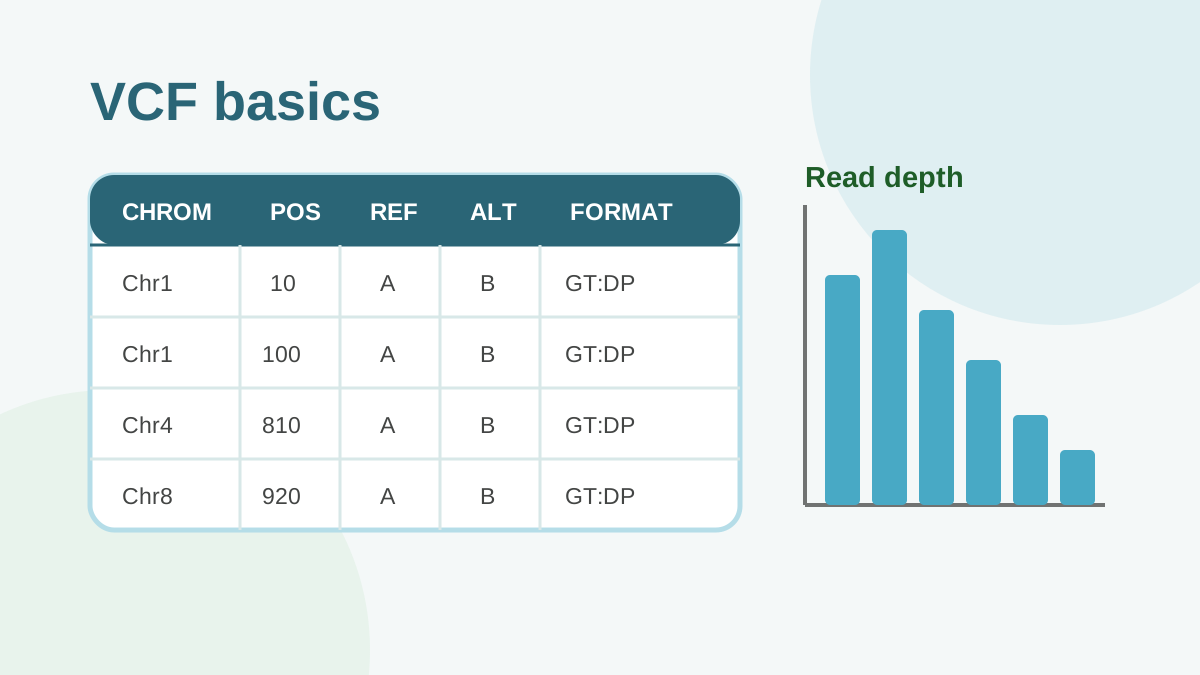
Set up R, then load, inspect, filter, and visualize a VCF with diploid- and polyploid-aware checkpoints.
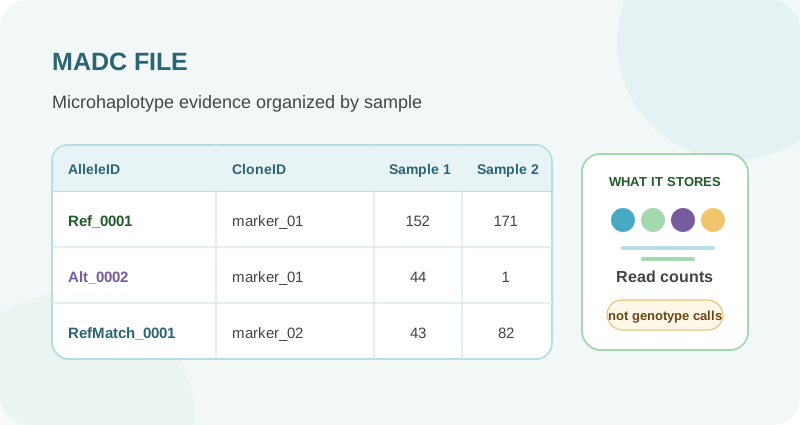
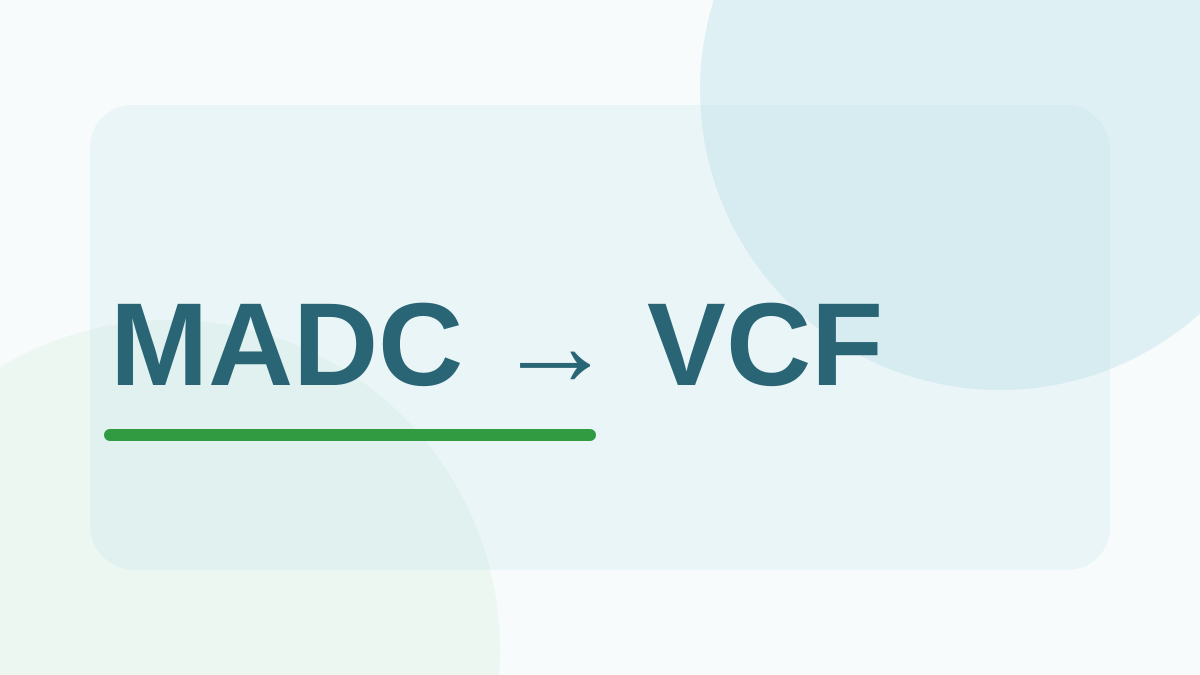
Understand how DArT MADC files represent microhaplotype read counts and how BIGr turns those counts into variant data.
Use BIGr to recover biallelic read counts, call diploid or polyploid genotypes with Updog, and filter a validated VCF.
Use Qploidy2 with DArTag data to estimate ploidy, aneuploidy, and large-scale copy-number variation.
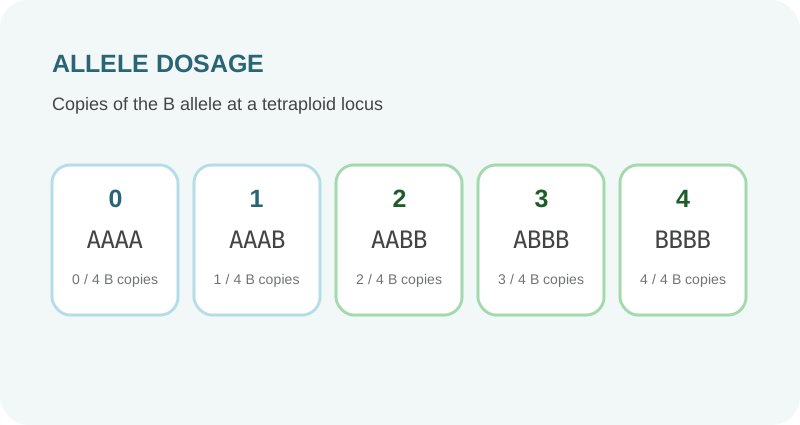
Understand what allele dosage represents in diploids and polyploids, how it differs from read fraction, and why dosage uncertainty matters.
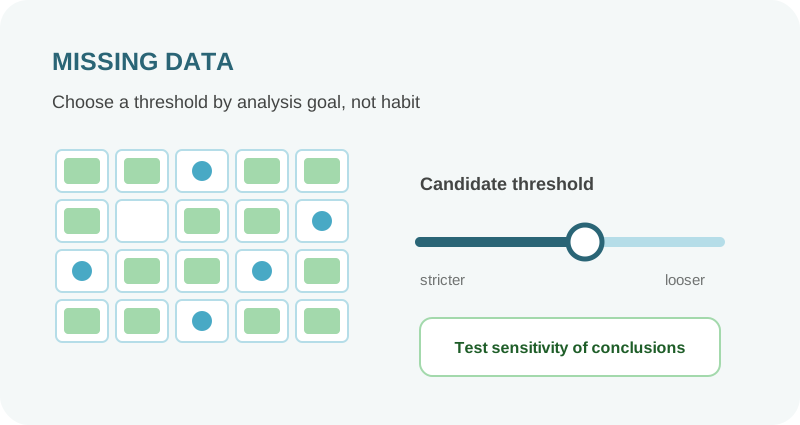
Choose marker and sample missingness thresholds by diagnosing the data source, matching the downstream analysis, and testing sensitivity.
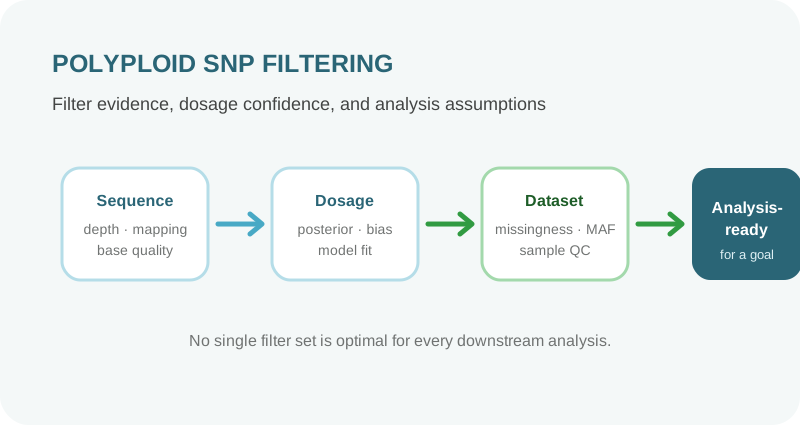
Build a polyploid-aware SNP filtering strategy that considers sequence evidence, dosage uncertainty, duplicated genomes, and downstream goals.
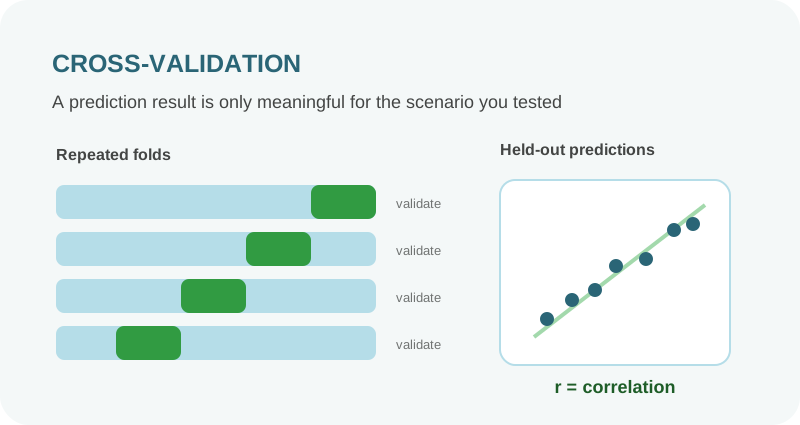
Interpret cross-validation results in genomic prediction without confusing predictive ability, selection accuracy, and the realism of the validation design.
Understand the difference between testing recorded parents and searching a candidate-parent pool with SNP genotype data.
Use a worked SNP dataset to clean a pedigree, validate recorded parent-offspring trios, and search candidate parents with BIGpopA.